
Mexico's Yucatán Peninsula
The Yucatán Peninsula of Mexico is located between the Gulf of Mexico and the North West Caribbean Sea. It is comprised three States, Campeche (capital Campeche), Quintana Roo (capital Chetumal) and Yucatán (capital Merida. The Yucatán is also home of the major resort areas of Cancun, Cozumel, Playa del Carmen and the Maya Riviera.
Traveling this unique territory will acquaint you with some of Mexico's hidden gems, like Akumal, Grutas de Balankanche, Isla Holbox, Isla Mujeres, Rio Lagartos, Xcaret and Xel-Ha. Plus the cities of Escarcega, Progresso, Ticul and Valladolid.
The people of the Yucatán are more relaxed, more friendly and just more tranquil than you meet elsewhere in Mexico. Even the land around you seems different. The Mayan legacy creates a unique, almost other-worldly feel. The ruins of of that once great culture are plentiful throughout the Peninsula.
The Yucatan peninsula has become one of the most popular travel destinations in Mexico. Most tourists can be found on the white sand beaches and in the crystal clear waters on the Caribbean side, but the peninsula has much more to offer.

Mexican Road Signs
If you don't speak Spanish, driving through Mexico presents a few problems. A big one is knowing what all those road signs mean.
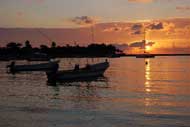
Akumal, Quintana Roo
One of Mexico’s most successful ecological endeavors has been its “turtle watch and protection program” at Akumal.
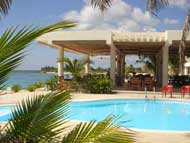
Paa Mul, Quintana Roo
Paa Mul offers some of the best diving on Yucatan's Caribbean coast. It has been described as the easiest diving area, yet the most rewarding.
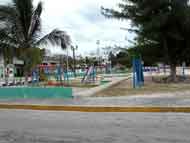
Puerto Morelos, Quintana Roo
Puerto Morelos is a sleepy fishing village that is not at all touristy. The road into town leads directly to the zocolo or town square.
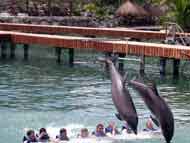
Xcaret, Quintana Roo
What, exactly, is Xcaret? It is an "eco-archeological theme park"... imagine Disney-meets-National-Geographic, and you might have an idea.
Becán, Campeche
Becán, meaning "path of the serpent." or maybe "ditch of water" is one of the most fascinating sites in the Yucatán.
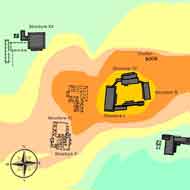
Chicanná, Campeche
Chicanná translates from Maya as "House of the Mouth of the Serpent". It is not a large Maya site, but is well worth the visit.
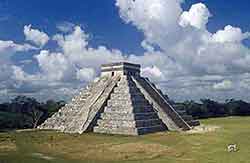
Chichén Itzá, Yucatán
The Maya name Chichén Itzá means "At the mouth of the well of the people".
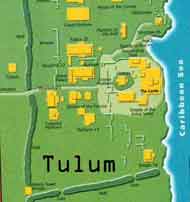
Tulum, Quintana Roo
Tulum is the most visited archaeological site in Mexico. Its location on the shore of the Caribbean makes a delight.
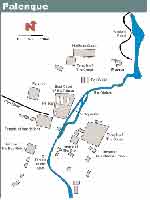
Palenque, Chiapas
Palenque sits proudly in Palenque National Park, in the foothills of the Tumbalá mountains of in the Mexican state of Chiapas.
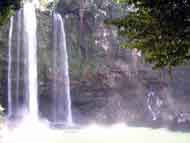
The Misol-Ha Waterfall, Chiapas
The River Misol-Ha (meaning "Streaming Water"), creates one of Chiapas' most wonderful natural sights.
Cinco de Mayo
The 5th of May is not Mexican Independence Day! That is 16th of September.